Independent buying guides · Clear comparisons · Practical tools
MEAT SLICERGOOD DECISIONS. BETTER PREP.

Plan around the workload

Commercial meat slicers

Choose equipment around service demand, food mix and documented operating limits. The word commercial in a seller title is a starting point for questions, not proof that a machine suits a restaurant, deli or regulated food operation.

As an Amazon Associate, we may earn from qualifying purchases.

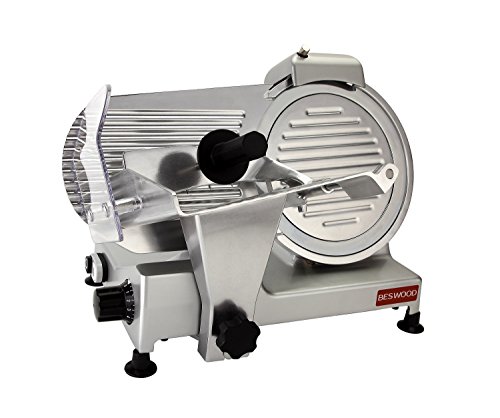
BESWOOD 250
BESWOOD

BESWOOD 250

The BESWOOD250 occupies the step between a lightweight food slicer and a larger deli machine. Its listing identifies a 10-inch chromium-plated blade and 240W motor. The buying decision is whether that larger format earns its place on your counter through regular slicing, rather than whether a bigger blade looks more professional.

VEVOR 10-inch 240W slicer
VEVOR

VEVOR 10-inch 240W slicer

The VEVOR 10-inch 240W listing describes a chromium-plated blade and semi-automatic operation. It is a candidate for buyers comparing the larger circular-blade format with BESWOOD250, but similar dimensions in the title do not make their service support, carriage travel or permitted foods identical.

KWS 12-inch 420W slicer
KWS

KWS 12-inch 420W slicer

The KWS catalog record explicitly names a 12-inch stainless-steel blade and 420W motor. The title also makes ETL and NSF certification claims. Those claims are useful prompts for due diligence, not a substitute for matching the current listing's exact model to the relevant certification records.

KWS MS-12ES
KWS

KWS MS-12ES

The MS-12ES listing names a 12-inch blade, 420W motor and extended back space. That last feature makes this model worth a separate dimensional investigation when ordinary food supports restrict the pieces you want to slice. Do not convert extended back space into an assumed capacity figure.

Build a shortlist that matches the job

Write down your peak batch length, the foods handled, the space available for cleaning and the service support you need. Match an exact model to its manual and applicable certification records. Separate motor-driven blade operation from automatic carriage feeding.

When this mattersWhat to compare
Busy service periodsCompare documented duty cycles and service access, not estimated output from watts.
Cheese on the menuCheck explicit cheese suitability and workload restrictions.
Larger bacon or deli cutsMeasure the required feed envelope in both directions.
Business installationConfirm electrical requirements, sanitation access and local requirements before ordering.

A mistake to avoid

Treating every electric slicer as an automatic-feed machine or assuming a certification phrase covers an unidentified model.

Broaden the decision with Slicer blades & care or return to the meat slicer selection overview. The slicer finder can help separate mechanisms before you compare individual models.

Guides for this collection