For family sandwich prep, choose a machine around the food portions you can use safely and the setup-and-cleaning routine you will repeat. A compact model can be sufficient for small deli blocks; a larger format earns its space only when documented capacity or operating limits solve a real problem.
The NutriChef entry lists a 200W motor, removable 7.5-inch blade, food pusher and a 0–15mm thickness dial. Its compact-blade format belongs on a home-use shortlist where modest batches and post-use cleaning matter more than commercial throughput claims.
This CUSIMAX listing distinguishes itself with two removable 8.7-inch blades and a removable food carriage. It advertises a 1–20mm adjustment range. The practical question is whether the food-contact components you must wash can be removed in a way you are comfortable repeating after each session.
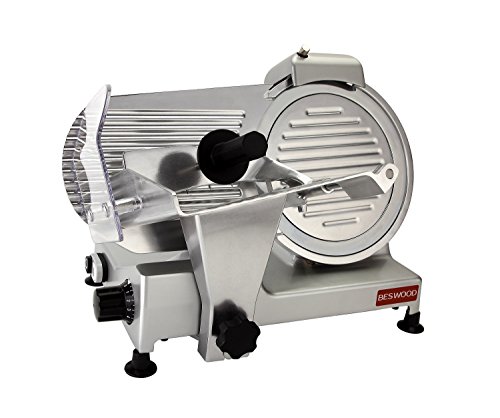
The BESWOOD250 occupies the step between a lightweight food slicer and a larger deli machine. Its listing identifies a 10-inch chromium-plated blade and 240W motor. The buying decision is whether that larger format earns its place on your counter through regular slicing, rather than whether a bigger blade looks more professional.
A worked comparison for occasional and regular use
Run a two-week routine check before upgrading
Family sandwich preparation is a scheduling problem as much as a cutting problem. A slicer can create the texture you prefer, but it also introduces setup, cleaning and food-storage decisions. The best fit is the machine you can use correctly for the amount your household actually eats, not the one that promises the highest output in an advertising headline.
Count the portions before choosing the appliance
Start with the lunches you realistically pack. Multiply the number of sandwiches by your usual meat portion, then add only the other meals you already plan. Use your own portion preferences; a generic appliance recommendation should not prescribe how much everyone must eat.
For a planning example, two people taking four sandwiches each at 60 grams of meat per sandwich need 480 grams of usable slices. This is arithmetic, not a dietary recommendation. A household that uses half that amount has a different batch requirement, even if both are described as a family of four.
Separate usable slices from the amount purchased. The original package may include a heel, irregular ends or portions intended for a different recipe. Record what you actually use over several sessions rather than assuming every gram becomes a matching sandwich slice. A kitchen scale can make this calculation more reliable than counting slices of varying size.
Remove packaging and create a permitted supported portion
Does the food fit without awkward subdivision?
Slice
Test setting, operate within limits, handle final heel
Do operating and rest instructions suit the batch?
Portion
Weigh, package, label and store
Is there clear space beyond the carriage?
Clean
Disassemble, clean, dry and reassemble as directed
Can you follow the entire procedure comfortably?
Do not compare only the third stage with buying sliced meat. A fast cutting pass can still produce a long session if the appliance is difficult to retrieve or clean. Conversely, a modest machine kept in a suitable station may be easy to use regularly even if its cutting speed is unremarkable.
You can time your own first sessions once you own the equipment. Keep the numbers separate so you see which stage dominates. If setup and cleaning take most of the time, a faster motor is unlikely to transform the routine. Changing the station or buying smaller suitable food portions may matter more.
Choose the food format before the blade diameter
A small rectangular deli block is easier to evaluate for fit than a large rounded roast. Measure the widest prepared face and check the holder’s usable range. If your weekly meat varies between ham, turkey and roast beef, consider the most demanding shape you genuinely expect to use rather than an imaginary maximum-size roast.
Some foods are tender enough to fragment at extremely thin settings. A slicer cannot turn a loosely structured cooked product into a cohesive deli loaf. Test a useful setting and accept slightly thicker slices when they make a better sandwich. The roast-beef guide helps separate grain direction and support from machine size.
Cheese introduces another compatibility question. Do not infer unlimited cheese slicing from a broad meat-and-cheese title. Check the exact model’s permitted foods and operating instructions. If cheese is only an occasional addition, buying it pre-sliced may be simpler than selecting the whole machine around an undocumented secondary task.
Home formats to investigate
The Nutrichef B0CQMMKYHD listing describes a 200W appliance, removable 7.5-inch blade, food pusher and 0–15 mm dial range. It is a candidate for small prepared deli portions where the documented capacity fits. The title’s word automatic should not be interpreted as hands-free carriage movement without confirming the mechanism.
The CUSIMAX B0C4YKDMDM lists two removable 8.7-inch blades and a removable food carriage. For a family routine, the relevant follow-up is how the manual tells you to select, remove and clean those components. Two included blades are only useful if their approved roles match the foods you cut.
The BESWOOD250 B01AQH636Q is a ten-inch, 240W deli-format candidate. Consider it when you can give the machine a suitable station and your real food dimensions justify investigating the format. Do not buy it solely on the assumption that a larger blade saves cleanup time; that has not been established here.
Our deli slicer collection provides these catalog options for comparison. Their titles supply starting specifications; they are not the result of a timed family-meal trial, and the exact manuals must settle fit and operating limits.
Build a storage plan that matches the food
It is tempting to slice an entire large package to avoid washing the appliance again. That is not a sound reason to prepare more refrigerated food than your household can use within the appropriate period. FoodSafety.gov lists opened or deli-sliced luncheon meat at three to five refrigerated days. Use the category-specific chart, product instructions and original dates.
A Sunday session does not automatically make every item suitable for a full week of lunches. Determine the applicable storage period for each food and plan appropriate portions, freezing or another preparation session accordingly. Slicing and repackaging do not erase time already spent open or cooked.
Label portions by food and relevant date. If two household members have different sandwich routines, divide by actual use rather than by equal-looking stacks. The aim is to reduce repeated handling and forgotten leftovers, not to create an impressive row of containers for its own sake.
A simple cost model without promised savings
Use three figures from your own shopping: the cost per usable pound of the whole product, the cost per pound of a comparable sliced product and your weekly usable amount. The difference multiplied by weekly consumption gives a rough food-cost opportunity before equipment, energy, cleaning supplies and your time.
For a purely hypothetical example, a two-dollar difference per usable pound at one pound per week gives a two-dollar weekly gross difference. A machine costing several hundred dollars would not pay for itself quickly on that alone. Replace those invented example figures with actual receipts; do not read them as current prices or a forecast.
Include food you fail to use. A cheaper large ham is not cheaper per eaten portion if part of it is discarded. Likewise, if you would still buy specialty sliced meats, do not count those purchases as savings generated by the slicer. Honest comparisons use like-for-like food and the volume that truly changes.
Match the station to ordinary weekdays
Measure working clearance, not just the storage rectangle. The carriage must travel, the operator must reach the controls and the receiving container must stay outside the moving path. You also need a way to clean parts without balancing them in a crowded sink.
If the machine is stored, consider the lift and carrying route. A shelf above shoulder height or a cramped cabinet can turn a small task into an awkward routine. Check the manufacturer’s handling guidance and the actual appliance weight before assuming one person can easily move it.
Keep children and distractions away from the active station. A family appliance should be operated by someone following its instructions, not incorporated into a crowded lunch-packing line around the blade. Other household members can assemble sandwiches at a separate surface after the slicing work is stopped and the food transferred.
Decide which inconvenience you are solving
If the complaint is that store slices are too thick, a suitable home machine may provide the control you want. If the complaint is shopping frequency, storage limits may still require regular planning. If the complaint is expense, do the usable-food calculation before adding an appliance. Each reason produces a different purchase decision.
A household preparing small amounts may prefer to request a sample thickness at the deli counter. Another household may value custom slices enough to accept cleanup. A third may need a larger machine because a favorite boneless roast does not fit a compact format. None of these choices is more serious or more authentic than another.
A worked comparison for occasional and regular use
Consider an occasional household that makes six sandwiches for one outing. Its main benefit may be choosing a preferred texture for that event. A compact, documented fit might be enough, but setup and cleaning occur for a single short batch. Buying the meat sliced to order could reasonably remain the preferred option. There is no need to invent weekly savings for a task that happens monthly.
Now consider a household that already buys suitable boneless deli blocks for several planned meals. The repeated task gives more opportunities to use the machine, but also more cleaning sessions and a greater need for consistent storage habits. This household should compare actual food dimensions, the operating limits for each session and whether the appliance can remain in a practical station.
Finally, consider someone slicing a large home-cooked roast only after a Sunday dinner. A machine optimized for small deli blocks may fail because the roast is wide or fragile. Dividing the roast appropriately and choosing a realistic thickness could solve the problem; if it does not, larger documented capacity may matter. These three scenarios can involve similar annual meat quantities while requiring different equipment decisions. Frequency, prepared food geometry and the complete session routine are more informative than calling all three “meal prep.”
Run a two-week routine check before upgrading
If you already have a slicer, write down what prevents you from using it: food fit, setup burden, inconsistent output, cleaning difficulty or batch limits. Keep the observations for a couple of ordinary preparation cycles. Upgrade only when a documented feature of the replacement addresses the obstacle.
For inconsistent thickness, start with a repeatable sample setting. For tearing or smearing, use the food-texture diagnostic. Replacing the appliance before isolating the problem risks buying a larger version of the same frustrating routine.
For a first purchase, obtain the manual, verify the food fit and imagine the entire session in your real kitchen. Choose the smallest suitable format that meets the documented requirement and remains comfortable to maintain. More capacity is worthwhile when you use it; a workable routine is what makes the appliance valuable.
Check the model against your decision
BESWOOD 250: Confirm the cutting envelope, assembled footprint, lifting weight, approved foods and cleaning procedure in the BESWOOD250 manual.
As an Amazon Associate, we may earn from qualifying purchases.