Upgrade when a documented capacity or operating limit repeatedly prevents the work you need to do. If food fits but results have deteriorated, investigate approved maintenance and technique first. A bigger blade or higher wattage is not a diagnosis.
This CUSIMAX listing distinguishes itself with two removable 8.7-inch blades and a removable food carriage. It advertises a 1–20mm adjustment range. The practical question is whether the food-contact components you must wash can be removed in a way you are comfortable repeating after each session.
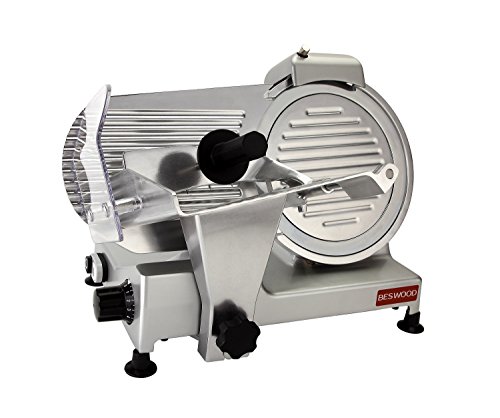
The BESWOOD250 occupies the step between a lightweight food slicer and a larger deli machine. Its listing identifies a 10-inch chromium-plated blade and 240W motor. The buying decision is whether that larger format earns its place on your counter through regular slicing, rather than whether a bigger blade looks more professional.
LEM's BigBite 10-inch electric slicer is cataloged as a home-use appliance. Its appeal for a shortlist is the combination of a named product family and a larger blade than compact domestic machines. Jerky suitability still depends on the manual's permitted food state and the size of the prepared cut.
Capacity upgrades should preserve the result you want
Session limits are a better comparison than power alone
When maintenance comes before shopping
Cleanup can justify a different design
Calculate the incremental cost
Compare replacement candidates against the symptom
Write an upgrade acceptance test before buying
A slicer that once felt convenient can become the wrong fit as your cooking changes. You may now prepare larger roasts, make several batches at a time or want slice shapes that require more carriage capacity. Those are valid reasons to consider an upgrade.
But a disappointing result does not always mean the machine is too small. A dull or damaged component, a changed food preparation method or an incomplete cleaning routine can affect a machine that previously suited the task. Replacing it without identifying the problem risks buying a more expensive version of the same frustration.
Describe the failure in one sentence
Use a specific observation rather than “It is not powerful enough.” Examples include “My usual boneless roast exceeds the documented cutting height,” “The manual requires cooling before my batch is finished,” or “The same permitted food now tears where it previously sliced cleanly.” Each points toward a different response.
The first is a capacity mismatch. The second concerns the permitted work cycle. The third is a change in condition or technique that deserves investigation. These categories can overlap, but writing the symptom clearly prevents an attractive product specification from deciding the diagnosis for you.
What is happening?
First investigation
When replacement becomes relevant
Food does not fit the documented envelope
Measure the food and verify intended orientation
You need that whole slice shape regularly
Permitted sessions are too short
Compare batch timing with the exact manual
A different documented operating limit solves the schedule
Results deteriorated on the same task
Approved cleaning, condition checks and support
Repair is impractical or the machine cannot be restored appropriately
Cleanup discourages use
Review the required disassembly and your workspace
A verified design change makes the routine manageable
You want more foods than the manual permits
Identify the specific new food and state
Another machine explicitly supports that use
Capacity upgrades should preserve the result you want
Measure the food that no longer fits. If dividing it into smaller pieces produces an acceptable result, you may not need another machine. If division ruins the intended presentation, such as a complete slice across a roast or a long bacon strip, additional usable capacity has a clear purpose.
Compare the cutting envelope and carriage support of the replacement, not only blade diameter. A larger blade with insufficient usable carriage space can leave the original problem unresolved. The size guide explains the different measurements to record.
Avoid purchasing capacity for a task you perform once a year unless that task matters enough to justify the ongoing cost and space. Occasional unusual food preparation may be easier to handle through a different appropriate method. An upgrade should improve your normal routine rather than create a permanent accommodation for an exception.
Session limits are a better comparison than power alone
Read the current manual’s operating restriction and write down how it affects an ordinary batch. Do you reach the limit every session, or only when preparing an unusually large amount? Does the required cooling interval interfere with your schedule, or can it coincide with another preparation step?
For a concrete contrast, the Cuisinart FS-75 manual specifies a ten-minute maximum continuous period with cooling, while LEM publishes a thirty-minute run time for its BigBite ten-inch model. These are model-specific figures, not a universal home-versus-commercial rule. Confirm the exact replacement’s current instructions before relying on its limit.
Do not interpret a longer published interval as permission to ignore other food or operating restrictions. It answers one question about your workflow. It does not establish that the machine can cut everything you might load, nor does a wattage comparison prove it will finish a particular batch faster.
When maintenance comes before shopping
If the machine previously performed the same permitted task satisfactorily, start by comparing current conditions with that earlier use. Has the food changed? Is the thickness different? Has the manufacturer’s maintenance schedule been followed? Are owner-removable parts installed correctly after cleaning?
Use only the checks and procedures authorized for your model. A blade-condition concern belongs with the instructions or qualified support, not an improvised sharpening experiment. Our sharpen-or-replace guide helps organize that decision without treating every blade as serviceable in the same way.
Stop using equipment that is damaged or malfunctioning. The point of investigating maintenance is not to keep an unsafe appliance running. It is to distinguish a repairable issue from a genuine mismatch between the equipment and your needs.
Cleanup can justify a different design
Suppose slicing itself is satisfactory, but reaching food-contact areas is awkward. A larger blade will not automatically improve that experience. Compare the replacement’s documented carriage removal, blade access and reassembly procedure with the exact step that frustrates you.
Watch or read the official procedure from start to finish. A single photograph of a removed tray may omit several preceding steps. Count tools, fasteners, lifting and the space needed for parts. Identify a specific design difference that would make the routine easier rather than accepting an “easy clean” slogan.
You may discover that a better layout solves the problem without replacement. More drying space or moving the machine away from a low cabinet could matter more than its construction. Conversely, if the design itself remains impractical for you, that is a valid reason to change equipment.
Calculate the incremental cost
The relevant upgrade cost is what you spend now, minus any legitimate value recovered from the old machine, plus additional setup needs. Do not justify an upgrade by counting savings the current slicer already delivers. Only the additional benefit belongs in the comparison.
For example, if a replacement costs an illustrative $400 more after all adjustments and merely saves you one inconvenient pause each month, decide what that convenience is worth to you. There is no universal answer. If it enables a recurring task your current machine cannot perform, the benefit is different and should be described explicitly.
Include a new storage location, appropriate support surface or shipping costs if they apply. Avoid assuming that a larger appliance can occupy the old one’s space. Complete the placement check before deciding the price difference is the only cost.
Compare replacement candidates against the symptom
A home-format CUSIMAX model may be worth examining when you want a different blade and carriage arrangement without automatically moving to a much larger machine. Its catalog listing provides an initial set of features, but obtain the capacity and manual before calling it an upgrade.
The BESWOOD250 and LEM BigBite ten-inch are larger-format candidates for buyers with a concrete need. Compare their official documentation against your food, batch and cleaning requirements. Do not call either universally superior; the useful question is whether its particular design fixes the limitation you identified.
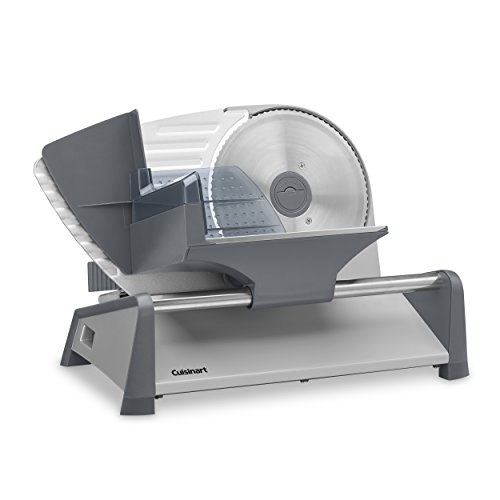
A Cuisinart FS-75 may still be appropriate when your tasks remain modest and the existing problem is with an unsuitable or damaged appliance, not insufficient capacity. An upgrade can mean a better fit and clearer support rather than moving to the largest machine in the collection.
Write an upgrade acceptance test before buying
The new machine accommodates the measured food in the intended orientation.
Its documented operating interval fits the normal batch.
The cleanup step that caused difficulty has an understood solution.
The operating and storage space has been measured.
The additional cost is justified by a specific benefit.
If you cannot complete those statements, you have not yet established why the replacement is better for you. Continue researching rather than shopping by a higher number. The home collection and commercial options can help once the requirement is clear.
Keep the current machine if it remains suitable, sound and practical. Repair through appropriate support when that resolves the problem. Upgrade when a different documented capability changes the outcome you care about. That approach produces a more satisfying purchase than treating every imperfect slice as a request for a bigger motor.
The FS-75 is a home food slicer with a removable 7.5-inch stainless-steel blade. Cuisinart's catalog title identifies a thickness adjustment from 1/32 to 1/2 inch and names bread, roasts and firm cheese. That range is useful for comparing intended slice styles, but it does not establish how cleanly a particular soft or sticky food will cut.